What was your inspiration to create Alpine Farmstead? What is the story behind it?
The entire valley in which Alpine Farmstead is situated has been in my extended family since the 14th/15th centuries. Over time (and due to big social changes), we lost everything.
Almost 30 years ago, an opportunity arose to buy a small part of this land, and that is where this project is now set. It has had a big emotional impact on my family. Not just the history of the place, but we grew up climbing, fishing and hiking in this area.
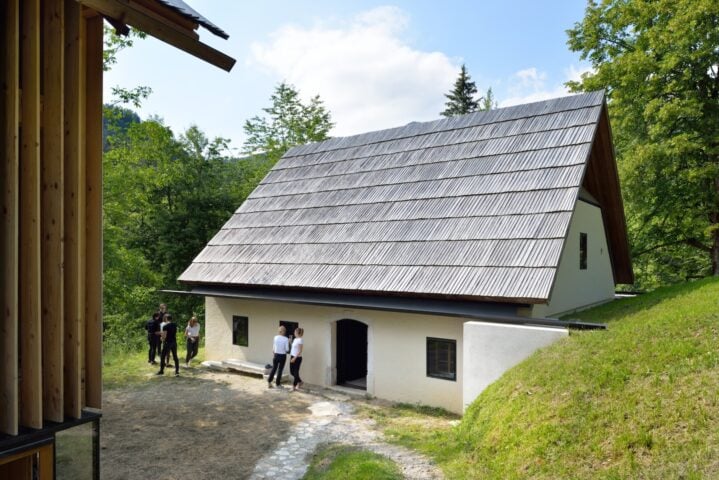
When I bought it, it was an abandoned farm. It was one of the first contemporary living spaces in the valley. In fact, the wood in the walls has been dated to the 5th/6th century. So it’s a very old living space, and the challenge was what to do with it.
This was a long process. When I got enough resources to seriously think about what to do, I hired a well-known architect. But after three attempts, we didn’t find a common solution. For me, the proposals didn’t feel like the right story.
I began to think that I would leave the land to nature. The buildings are made from stone and wood, both natural materials. I could imagine the forest reoccupying the space. At the time, it felt like a realistic solution, and I would simply come and stay with a tent.
While restoring my house in Ljubljana, I met a young architect who was unusual in his ideas. We became friends over the course of five or six years, and he visited the land in Solčava.
He noticed that when I was there, I was mostly outside, just using the abandoned house as a shelter during the night and when the weather was not good. He suggested that the whole valley was my house and the buildings (the house, granary and stable) were just the rooms.
The property is quite deep in the Alps, so there are regulations and laws that limit the renovations. You can’t just build a modern house – it has to look like an authentic alpine house. As a result, we were strictly limited by what we could do to the exterior.
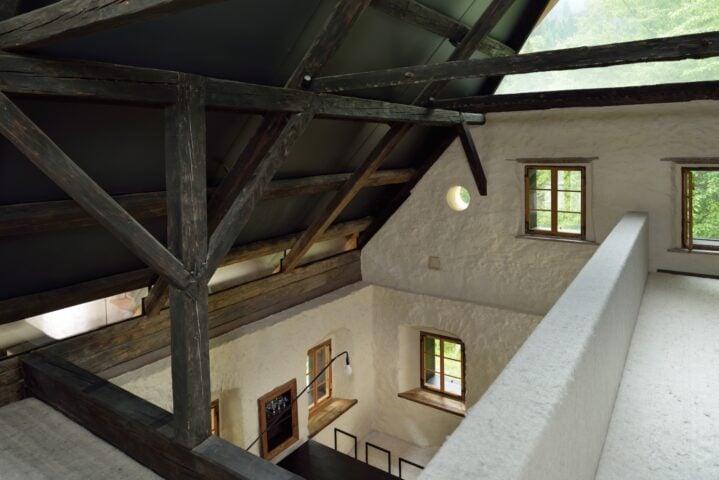
His idea was that each building should be restored with one purpose. The house would have the fire and kitchen, with everything connected to food. Meanwhile, the stable would be the sleeping, thinking and working area.
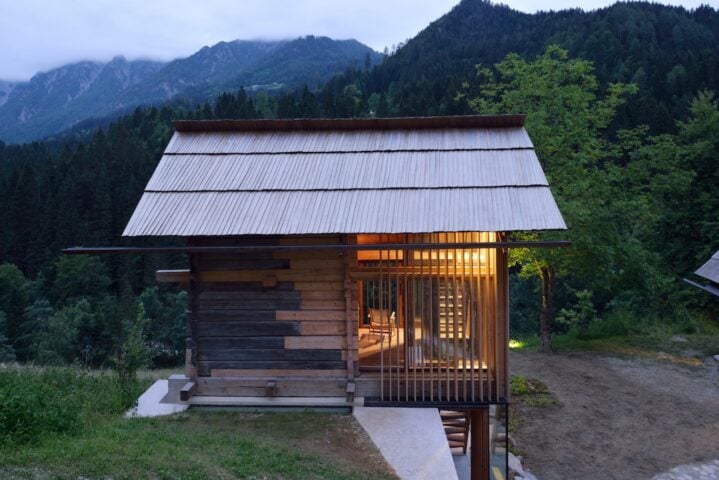
As it was no longer used for its original purpose, the granary would reflect the quality of life these days, with a sauna and pool.
Please tell us about the atmosphere. What does it feel like staying there?
With this project, we tried to show that the quality of life is about investing some energy to feel good.
When you stay at Alpine Farmstead, you will have to face some challenges, and through these challenges, you may see that the basic purpose of life in this changeable world is almost forgotten. The idea was to rediscover the roots of a life that is almost forgotten today.
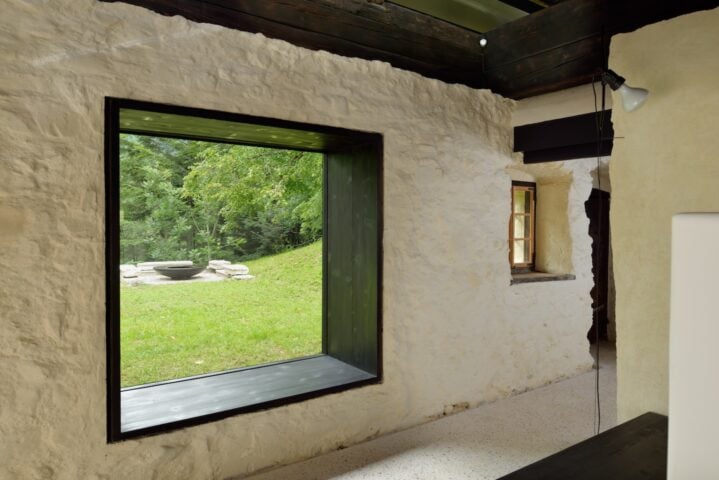
In the past, the windows were not very big. So you feel as though you are in a safe place when looking out towards the Alps. But it also gives you a new energy to go outside and challenge yourself with a long walk into the wilderness. It motivates you to go out.
To you personally, what makes Alpine Farmstead so special?”
I am working all the time, surrounded by a lot of people, and this impacts me internally. When I come to Alpine Farmstead, I can find myself again in a very short space of time.
If I stay there for a few days, I feel completely revitalised and calm. I can return to the urban environment of Ljubljana and function much more efficiently. My friends who have stayed report the same impact.
This is one of the only untouched parts of the Southern Alps, so it’s something very special. It was carefully selected in centuries gone by as a living space — it has an energy. There’s abundant sunshine during the day and a natural spring with alpine water. On three sides, it is very steep and not easy to approach.
It is not just that you go there looking for a change, but the history and nature have an impact. This is how I felt the first time I came, and why I needed around 20 years to decide what to do there.
We were thinking a lot about whether we should put this special project to commercial use. But decided to for educational purposes. Not just regarding how we approached the architecture and restoration, but also to show what our attitude is to this special part of the Alps.
A book has since been released about the restoration by a globally recognised group of architects.
Together with the neighbouring farms, we are trying to maintain the valley as it was. Tourism is not the main objective – we are trying to carefully preserve the area for the future.
Do you have a policy regarding children?
Alpine Farmstead is designed as a family house, and children are welcome. When it comes to pets, we welcome well-behaved dogs – we just don’t want them in the wooden loft.