

Villa Tulum
Villa Tulum is located away from the crowds but just minutes away from the pulsating heart of Tulum and the vast sandy beach with all the restaurants and shops.
We often see our guests arrive stressed & burnt out. Candela changes all that.

Candela
Candela is a groundbreaking jungle villa in Tulum, conceived by an environmental engineer and built by Mexican architects to preserve 70% of the surrounding jungle while creating a stunning sanctuary of Mayan-inspired chukum surfaces and natural materials. Candela offers four floors of indoor-outdoor living, a rooftop jacuzzi, two private pools, and access to a private 137-metre beachfront within the UNESCO-listed Sian Ka'an Biosphere Reserve. Candela was designed around the philosophy of slowing down, with indirect lighting tuned to circadian rhythms, eliminating visual noise so guests sleep and feel deeply restored.
Candela is a 7-minute drive from Tulum town centre and 9 minutes from the nearest beach, so a car or bicycle is recommended. The rooftop is not suitable for young children who may climb, though it can be locked.

Collect 1 mile for every Euro you spend with us.
Found your stay cheaper elsewhere? Contact us and we’ll always try to match the price. Guaranteed.
Email us here for support.
What was your inspiration to create Candela? What is the story behind it?
Candela was designed around the concept of creating a community that enhances the quality of life for its residents while being deeply connected to its natural surroundings. We selected Tulum for our first project because of the natural resources and connectivity to Cancun and Mexico City — it’s accessible yet somewhat isolated.
Tulum is a magical place in terms of culture, gastronomy and archaeological sites. Even as a town of 60,000 people, it has attracted incredible minds. It’s a place that has always inspired, and we thought it was a place where we could do something different.
My background is in environmental engineering, and I wanted to do a project designed around water. Tulum has a lot of water — underground rivers, oceans, cenotes, lagoons and a lot of rain. So we wanted to treat the water with respect and leave it as clean as when we arrived at the site.
For the project, we hired Estudio Macias Peredo — a team of architects from Guadalajara. When we met these guys, it was like magic — they understood the concept, the project and where we wanted to go. Importantly, we wanted to preserve as much of the jungle as possible, rather than removing trees and putting them back again afterwards.
They designed these pyramid-shaped villas where you interact with the jungle and the light at different levels — some are more covered in shadow, others are super open. The main strategy was to build upwards rather than spreading the villas, and in doing so, we preserved 70% of the existing jungle on the site.
When we were considering the interior design, there was only one studio we wanted to work with - Habitación 116. It’s the number one studio in Mexico. Normally, they don’t do commercial work, but they liked the scale of the project and fell in love with the idea that it was an homage to what was already there — the jungle and the community.
We named the project Candela because it’s a specific type of light that requires some form of human energy to appear. We envisioned it as a beacon for how we can develop with nature and not just displace it.
Additionally, we drew inspiration from systemic acupuncture — the idea that you can modify a system without having to touch the whole. If you touch the needle in the right place, you can affect the whole movement.
At this point in time, four of the villas are finished and two are available for rent. In the next four months, we will deliver three more and the other five in 2026. We received our first guests at the start of 2025.
How would you describe the architecture and interior design? What is the atmosphere like staying there?
Candela looks beautiful online. But everyone who steps in has a reaction: “Now I get it.” The architects have published a book called “Quiet down the noise.” They’re not talking about the physical noise but the visual noise and how they tame this down with materiality and the design itself.
If you come to Tulum, you might be coming from a big city to a retreat or to slow down. Or maybe to work remotely but at a different rhythm. So we wanted to preserve this essence of slowing down, as that’s what happens at Candela.
When you enter the villas, you arrive in this magical place made from chukum — the Mayan stucco used to build the pyramids. It combines the cortex from a tree with cement and mineral colour. It was a way to create surfaces and give them colour, as well as provide water resistance.
Two guys from Mexico and Argentina started to revive this material a few years ago, and it has become super popular. At Candela Tulum, we have used it on the floors, the walls, the roof - everything is unified. The colour of the villas is the natural colour of the soil, and the colour in the pool is the reflection of the water with the chukum.
For the hard floors in the bathrooms and on the stairs, we used Mexican travertine from Veracruz and Puebla. It’s a tropical wood that’s long been used in Mexican haciendas. So the architecture is a mix of Mayan and colonial inspiration.
The use of light was also important to us. Everything is indirect light, from the niches in the roof to the reflection off the floors. This creates warmth as you never have bright lights, and your circadian rhythms are at their best. People always sleep very well at Candela. These days, that’s a luxury.
In the design, we wanted to create the experience of being inside and outside. There are terraces on every single floor, all on the same side, so guests have privacy and views of the jungle.
On the bottom floor, you can see plants that are used for tea and food, grown in Mayan raised beds. As you go up, you find orchids and bird’s nest ferns. Eventually, you’re at the canopy level and can watch the sunrise and sunset.
Something else that was super important to us was the use of rock-limestone, which was also used in building the pyramids. The people who live around Tulum are specialists in carving rocks, so the base is hand-cut limestone.
To you personally, what makes Candela so special?”
The combination of everything that happens in the place transforms you. You might come with a lot of physical and mental luggage. But after you arrive, you drop things, connect to the place and become grounded.
It’s a more simplistic life that transforms the way you see things. We often see our guests arrive stressed & burnt out. After staying with Candela, we see that rekindled connection to themselves and nature return.
Some guests come from Mexico City, and they have never experienced the nature we have — they are amazed by it. I love to see Mexicans being proud of Mexico. When they stay at Candela, they get to eat Mexican food in a place designed by Mexicans and with interiors styled by Mexicans and photographed by Mexicans, all while honouring Mexican heritage. I’m very proud of that.
Do you have a policy regarding children?
We welcome all ages, but the rooftop is not ideal for young kids, particularly if they are climbing. We have a key so parents can lock it. Also, it’s important to remember you are in the jungle and parents need to be watchful of children.


Each of the villas is raised off the ground due to the heavy rainfall. At the entrance, there is somewhere to clean your feet as the villas are designed to be barefoot. Just inside the entrance, there is a place to hang your bags and a bathroom.
From the entrance, there’s a "reveal" moment — you see the pool and the kitchen on the left. The kitchen is the heart of the house and was designed to be used by both guests and our in-house chef, who prepares recipes passed down from her grandmother. It’s a thoughtfully designed place to mingle, talk and cook.
At the back is the pantry, which we can stock with groceries on request, as well as an area with a washer and dryer. All of the appliances (including the air-conditioner and dishwasher) are hidden behind wooden panels and are there when you need them.
The kitchen, dining and living room are open-plan and connect to a terrace that’s completely shaded. The chairs and couch here are lower than normal, so you are close to the ground and in a relaxation mode.
On the verandah is another bathroom and the pool, which faces what we call the “green ocean” — you feel as though you are part of the jungle. Mayan archaeological sites are always in the process of discovery, with many of the structures still covered by jungle. We wanted to recreate that when you are beside the pool and the birds are flying around you.
All of the ground floor doors are unified by a wooden panel, and when you open this, you can go upstairs. Each of the four bedrooms is like a private cave with blackout mechanisms so guests can have a really good sleep. All of the rooms (except one) have indoor and outdoor showers.
On the rooftop is a kitchenette, a dining space and a solarium with space for 10 people, as well as a heated jacuzzi. The sun can be very harsh in the daytime, so this area is designed more for sunsets and stargazing.
Aside from in-house chefs who can prepare meals for guests, we can arrange for massages, sound healing sessions, yoga classes and personal trainers to come to the villas. If we have bigger groups, we have a communal area — the Socco — that can host up to around 12 guests for yoga classes or up to 80 people for events.
We also have an oceanfront piece of land inside the UNESCO-listed Biosphere Reserve of Sian Ka’an. Here, we can host picnics, brunches, meditation sessions and yoga classes along our 137 metres of beachfront. It’s about 20 minutes’ drive from Candela and guests are welcome to visit as they like.
CONCIERGE SERVICE
We offer full concierge support — from car rentals and tours to wellness services, healing sessions, and babysitting.
POOL
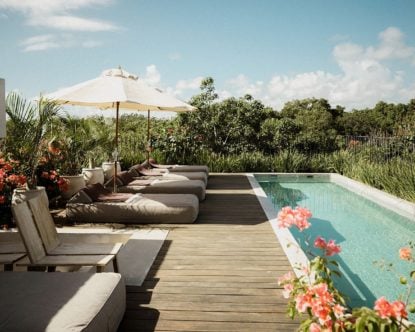
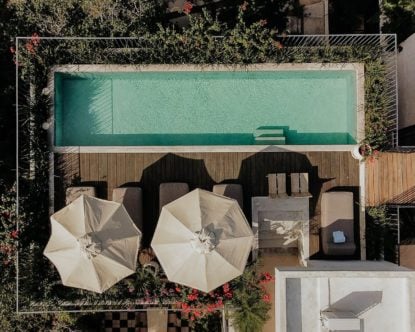
There are two pools, a rooftop pool with a lounge terrace and a downstairs pool with a terrace area.
BEACH PRESERVE
Our private beach reserve is located in the stunning Sian Ka'an Biosphere. This experience is available at an additional cost. We offer two options: a relaxed picnic-style visit, or a more elevated setup with tacos and full service (also at an extra cost).
EL ZOCO / LOBBY AREA
A versatile shared space ideal for coworking, hosting intimate gastronomic dinners, workshops, or small group yoga sessions (up to 10 people).
There are three main archaeological sites nearby, including the Tulum ruins, which are around 15 minutes away by car.
Muyil is my favourite attraction in the area because it has an archaeological site and a natural reserve with a tower overlooking Sian Ka’an. You can explore by bicycle or take a boat cruise through the mangrove channels created by the Mayans to connect their inland sites with the ocean.
We have three or four cenotes in the area, including a new one, Pargo, which is a beautiful spot to swim and have lunch. They give Candela guests a unique treat! Additionally, there are lots of high-end restaurants along the coastline and ones with more of a local vibe in the town itself.
Candela is around a 30-minute drive from Tulum’s new international airport, which offers direct flights to destinations all over the world. From Candela to the town centre is a seven-minute drive or about 10 minutes by bicycle, with the nearest beach just nine minutes away by car.
Despite its small population, Tulum is remarkably multicultural, attracting people from all over the world and different parts of Mexico. There’s a unique, almost magnetic energy about the place — some say it’s because of the abundance of water in the area, keeping the energy constantly moving. It’s a destination where earthy, bohemian charm meets barefoot luxury, and where creativity, authenticity, and elegance effortlessly intertwine.
Tulum Town, nestled between the lush Mayan jungle and the turquoise Caribbean, is a vibrant hub alive with artisan boutiques, colourful street art, and a growing community of travellers, locals, and creatives. Here, modern design blends with rustic charm, bicycles weave through sun-dappled streets, and tacos and mezcal flow as freely as the jungle breeze. It’s a place to slow down, connect, and feel the pulse of everyday Tulum life.
A short ride away, the serene stretch of La Zona Hotelera unfolds along pristine white-sand beaches where boutique hotels, eco-chic resorts, and iconic beach clubs line the shore. Mornings begin with yoga beneath palm trees, afternoons are made for sun-soaked lounging, and evenings bring candlelit dinners under a sky full of stars. Tulum’s signature bohemian-luxe aesthetic is everywhere, offering a dreamlike blend of wellness, style, and nature.
Tulum has long been a trendsetter in gastronomy, fashion, and architecture, and there’s a palpable sense of inspiration in being so close to nature in so many ways. No matter what you do, there’s a simplicity in being able to create so much with so little. Together, Tulum Town and the beach zone offer the best of both worlds — the soulful and the serene, the authentic and the elevated — welcoming all who visit with wild, beautiful energy.
It’s always warm in Tulum but there are four main seasons.
Summer is when there’s a lot of sargassum seaweed on the beaches but also huge turtles that come to lay their eggs. You can sometimes see hatchlings scuttling into the water.
Hurricane season is October/November. During these months, you get the best sunsets and sunrises, plus the beaches are pristine as the hurricanes clean everything.
Winter is when everyone arrives from Ibiza and Mykonos — the season moves to Tulum. In November and early December, people are still arriving. Then, after 25 December, the party season starts and it gets very busy until late January. The high season continues until around March.
Late January to May is a good time to visit — it’s not too hot, there’s not so much rain and it’s not super high season.
Villa Tulum is located away from the crowds but just minutes away from the pulsating heart of Tulum and the vast sandy beach with all the restaurants and shops.


Set in the heart of the city, the villa is a minimalist-style jungle oasis that exudes a boutique hotel vibe. It features eight bedrooms and a gorgeous swimming pool surrounded by tropical garden.
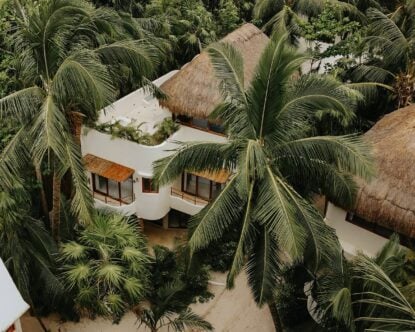

Offering enviable views of the Caribbean Sea, Casa Tulum lies in the heart of Tulum. It can accommodate up to 8 guests in 3 suites while enjoying all the facilities of a boutique hotel.


Award-winning design complex in Tulum with five private houses, pools, daily housekeeping and concierge service. Architecture-led stays with hotel-level comfort.


Surrounded by jungle, Azul Nomeolvides is an eco-conscious and off-grid property featuring six naturally-designed cabanas overlooking Mexico’s Lake Bacalar.
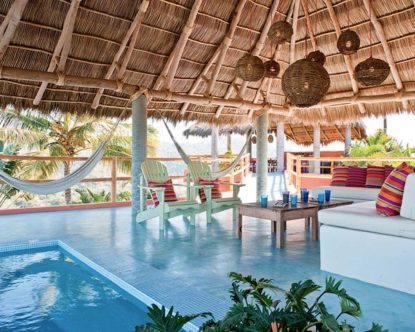
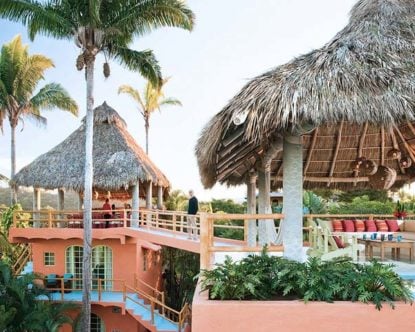
Casa dos Chicos is a beautiful vacation villa rental on the Mexican Riviera with its long, sandy beaches and just a short walk to the town of Sayulita.

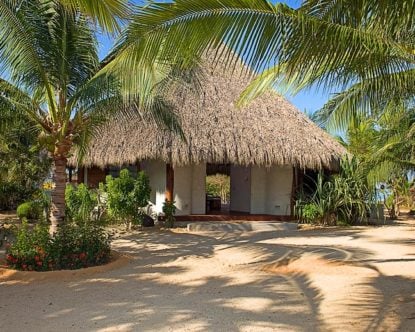
Cangrejo y Toro is a quiet vacation villa retreat on seven acres of oceanfront land located in Troncones on the Mexican Riviera.


Hacienda Sac Chic is a vacation villa rental on the Yucatan peninsula. It is a renovated sisal factory from 1850 surrounded by lush gardens and ideal for groups of friends or families.


La Tropical is a contemporary lush retreat hidden behind one of the many colonial facades of historic Merida.
Continue
Let’s prepare the booking details so you can review everything. You won't be charged yet.
Already have an account? Log in
Log in