


Le Mas de Peint
Le Mas de Peint is an authentic small boutique hotel on 550 hectares of land in the wild part of the Camargue in Provence.
The perfect place for a rejuvenating holiday.

Ferme du Vigneron
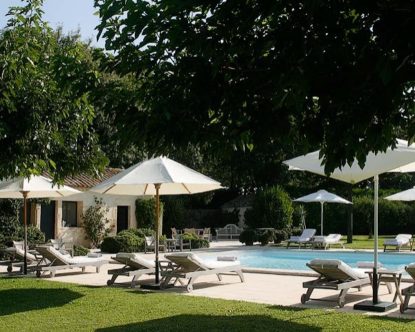
18th-century renovated wine farm? Yes! Provençal kitchen garden? Yes! 15x7m pool? Yes! Pétanque court? Yes! All with stunning views towards Mont Ventoux? Yes! Biking up Mont Ventoux? Strictly optional.
The beaches are a bit of a drive away, but the refreshing pool is only a few steps away.

Collect 1 mile for every Euro you spend with us.
Found your stay cheaper elsewhere? Contact us and we’ll always try to match the price. Guaranteed.
Email us here for support.
How would you describe Ferme du Vigneron in a nutshell?
La Ferme du Vigneron in the village of Vaison-la-Romaine is the perfect place for a rejuvenating holiday. You'll be in Vaucluse, an area of Provence that is world-famous for its beautiful lavender fields.
With large spaces for a couple or a family who will enjoy the views of surrounding vineyards and olive groves, and also the medieval town of Vaison-la-Romaine and Mount Ventoux. The guest house design gracefully merges light interiors with vintage chic and space to relax, play, and explore.
Please tell us about the history of the farm.
Originally, our holiday home was a vintner’s farm that also had some livestock. This road is a succession of farms, many of them now turned into family homes, but the land is still mainly agricultural. We are surrounded by vineyards producing Côte du Rhône wine, and walking distance up the road are some ancient olive groves.
What was your inspiration to buy an old vintner’s farm and turn it into a luxury holiday home?
It is something we had in mind for several years: we were visiting houses in several areas in the south of France. It was by chance that we visited this house after turning down another one that was too small in a nearby village. We fell in love with the size of the house, the views, and the perfect location, very close to town, yet with no neighbours. We didn’t mind the dilapidated state of the place as it was exactly what we were looking for: the renovation allowed us to tailor the space to our needs.
Please tell us a bit about the refurbishment and the interior.
The place was run-down and had been abandoned for about 10 years. It was basically a ruin. We used to live in London at the time. I came down to meet with the architect and builders every month for a long weekend or more in order to oversee the works and choose the materials. The terra-cotta floors of the guest house are reclaimed, as are the roof tiles. It was very important for me to have some antique materials to keep some link to its past. Where it couldn't be done, for the woodwork, for example, we made sure to have windows and doors made up with the original materials and style. The renovation took 12 months.
What has been most rewarding about the whole experience?
I used to be an equine veterinary surgeon, but this renovation made me realise how much joy bringing a ruined building back to life gave me. As I took a break in my time-demanding profession to raise our children, interior design became a more and more realistic option to be able to juggle work and motherhood. I completed this professional turn when living in Chile with the renovation of a modernist house in Santiago.
With time, I also started creating soft furnishings for the house and garden, with linen fabrics dyed with plant-based natural colours. It was originally to renew the outdoor fabrics that cover a number of loungers, sofas, and chairs, as they stay outdoors from June to October, they end up being torn down by the sun and the rain and need replacing.
I also started creating bathrobes and other items of clothing from the extensive collection of antique fabrics I have hoarded through the years. They are dyed using plant-based dyes and patterned using ancestral techniques from around the world. My brand, Mei Line, grew from the requests of friends and guests for those creations.
People have been very encouraging about my new career as a designer when realising how involved I am in the interior design and decoration of the house. I’ve also had some really nice comments from people who felt at home straight away because they thought the house was so user-friendly.
Please tell us a bit about your eco policy.
I work very hard on having an eco-friendly attitude in our house, as I think it affects us all in our daily lives. For example, our garden is pesticide and fertiliser-free. It is planted with Mediterranean plants that need very little or no water, which includes our own lavender field :-). Going away from the green lawn model, towards a Mediterranean garden has been a project over the last 15 years, and it has proved to be not only eco-friendly but also very aesthetic as the type of plants used have settled and thrived with very little maintenance.
We compost the grass cuttings, which is the only fertiliser we use, and I also compost kitchen waste, which I encourage the guests to do as well. So far, most have been very pleased with it as it noticeably reduces the amount of waste. It is very easy to separate as there is a dedicated stainless steel bin in the kitchen worktop, especially designed for it.
In 2018, I created a landscaped kitchen garden inspired by the "jardins de curé" which produced an incredible amount of vegetables (and fruits with the strawberry square) growing just in front of the kitchen: it made the soil to pot a reality. The geometric landscaping keeps it enjoyable to look at in all seasons, and as I researched local and organic seeds, the vegetables have been very strong, although I obviously don't use any pesticide nor chemical fertilisers, but a variety of green fertilisers, mainly comfrey and nettle. Overall, the landscaping and the kitchen garden have both been very rewarding as the results are really spectacular.
And of course, my interest in antique linen and natural dye is inserted in a movement that tends towards upcycling rather than producing anew. I feel this is an important part of the resistance to consumerism that is at the origin of climate change.
What do you particularly like about this part of Provence?
The perched villages of Provence around our area, starting with Vaison-la-Romaine, Seguret, and Le Crestet, have this wonderful feeling of going back in time while strolling through them. Their old stone keeps the freshness, so they are very pleasant to visit in the heat of summer.
Vaison-la-Romaine is the biggest Roman archaeological site in Europe. Its Roman theatre is very actively used for shows in the summer, and the remains of luxurious villas, therms, and high street shops are there for you to explore. They cover a large part of the "new" town, the old one being the perched medieval town.
I never miss the Vaison Dances festival in July, which takes place in the Roman theatre and attracts the best of contemporary dance. Also, the Chorégies of Orange are not to be missed for Opera lovers. The setting is really overwhelming, as Orange is one of the rare Roman theatres to have kept its scene’s back wall.
The Dentelles de Montmirail, a stunning chain of limestone hill which rugged hill tops remind one of lace, are a beauty; hiking through them will no doubt create unforgettable memories. The dentelles are diamond-shaped, with Vaison at the top, Baume de Venise at the bottom, Gigondas and Malaucene on each side; those names give you the clue to why many of its hill sides are planted with vineyards.
The Tour de France regularly has an etape climbing the Mont Ventoux, which bottom is just 15km away, and the area is a major draw for cyclists. There are miles and miles of roads for cycling accessible directly from our doorstep towards the Baronnies and the Pre-Alps, which are a favourite. It is a bliss in the wildly untouched nature of the Dentelles de Montmirail, or the Mont Ventoux.
Avignon and its wonders are less than an hour drive, but to my experience, our guests rarely get that far on a first visit as there are so many things to do locally.




This guest house has two suites. Suite one comes with a king-size bedroom and a living/dining room with a kitchen. The bedroom is en-suite with a bathroom. It has a desk adapted for remote work. The living room has a very large sofa that can double as a twin bed and an adjacent bathroom with a shower. There is a dining area by the kitchen with access to the terrace. Wifi is available throughout the guest house.
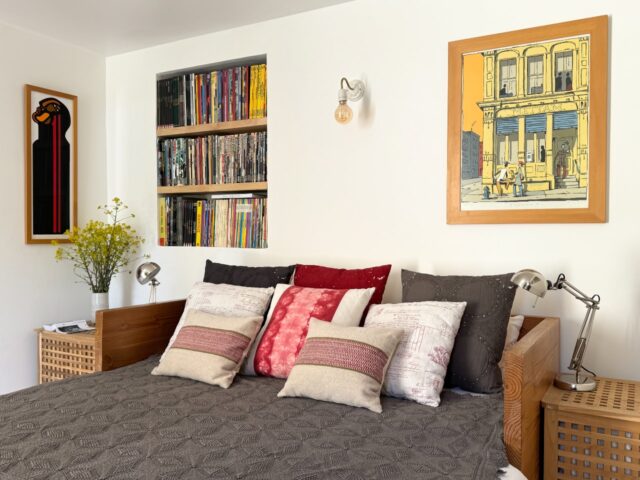
The second suite also comes with a king size bedroom, an ensuite shower room, a large closet, a library of comics and DVDs and independent access from the patio.
The interior design is pared down and bright. The decoration is restrained, limited to functional items, to keep the space open and easy for everyone to use. I was looking for a serene, open and welcoming style.
When we found the house, we fell in love with the size of it, the views, and the perfect location, very close to town, yet with no neighbours.
Outside, the 1-hectare property is landscaped in a way to use its variety of settings for different activities: swimming, sunbathing, dining, playing petanque, or just relaxing in more intimate spots when you feel like some quiet meditative time or just want to read a good book in a fresh spot: the summer house, various day beds.
PLEASE NOTE
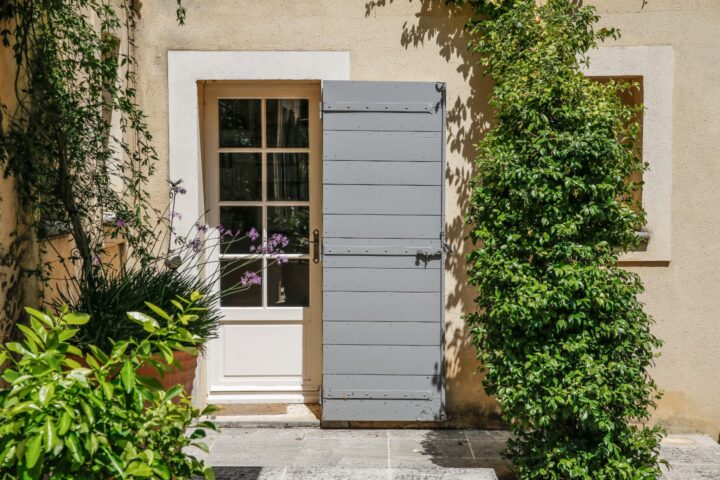
The guest house is attached to the main residence, where the hosts live. But the guest house has its own independent entrance, ensuring a high level of privacy for both guests and hosts. Separate access points and parking areas mean that paths rarely cross.
Guests have a private terrace directly off the living space, ideal for outdoor dining, complete with an electric BBQ. There is also a separate access to the pool via a wisteria-covered pergola.
Some outdoor areas—such as the central patio, kitchen garden, pool, pétanque court and surrounding viewpoints—are shared. However, the property spans generous grounds, and these spaces are typically very quiet and uncrowded.
The hosts lead a discreet presence and are often not around. Interaction is entirely up to guests, though those interested in local tips are often invited for a relaxed drink and conversation.
The en-suite bedroom has:
- a king-size bed, a desk with a Wi-Fi connection
- a full bathroom with an old-fashioned cast-iron bath and toilet.
The living/dining room - kitchen suite has:
- 2 single beds in an L shape that create a very large sofa, with a wealth of hand-dyed indigo shibori linen-covered cushions.
- a well-appointed kitchenette and a dining area
- an en-suite shower room with toilet.
- a terrace with a BBQ
The second suite has:
- a king-size bedroom
- en-suite shower room
- large closet
- library of comics and DVDs
- big screen TV
- independent access from the patio
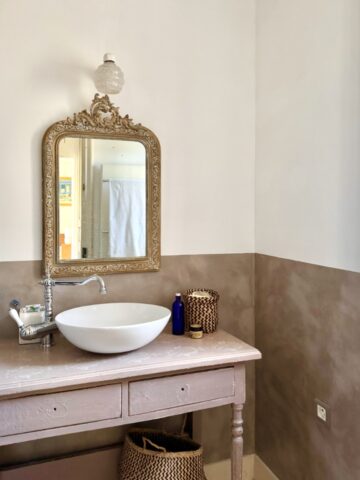
Both are furnished with a mix of antique and vintage pieces and linen textiles.
The en-suite bedroom has:
- a king-size bed, a desk with a Wi-Fi connection
- a full bathroom with an old-fashioned cast-iron bath and toilet.
The living/dining room - kitchen suite has:
- 2 single beds in an L shape that create a very large sofa, with a wealth of hand-dyed indigo shibori linen-covered cushions.
- a well-appointed kitchenette and a dining area
- an en-suite shower room with toilet.
- a terrace with a BBQ
The exteriors include beautiful Mont Ventoux views, a terrace with a BBQ, several sitting and lounging areas in the garden with open views over the medieval town of Vaison and Mont Ventoux, a swimming pool, and a pétanque court. There is also a summer house at the top of a lavender field.
The garden was landscaped around the house, including a kitchen garden and a lavender field. The original native forest includes oak trees, parasol pines, thyme, rosemary and native bushes where left largely untouched in a large part of the 1-hectare grounds. We don’t have any direct neighbours because of the size of the property grounds.
Ferme du Vigneron also offers a Wi-Fi connection and a desk in the bedroom for remote work.
Vaison-la-Romaine offers lots of sightseeing: the Medieval part of town on the hill with its cobbled streets and stone houses, the Roman theatre and museum, the ruins of the thermal town, and near the post office are the ruins of another part of the Roman village. There are also many more medieval villages nearby to explore.
Food is taken very seriously; local and slow are the keywords. Vegetables are grown in the kitchen garden. In town, a variety of food shops offer the very best you can expect from the award-winning cheesemonger and butcher, to the fishmonger, patisserie and wine merchant.
Wine tasting is a must here, too, of course. We have a selection of wineries in the area that we recommend, and local wines are always included in our welcome hamper.
Upon previous arrangement, and for an extra fee, the owner, a sommelier, can organise private wine tours and wine tasting classes.
We also offer our guests an introductory class in natural dyes in the in-house studio: ‘Initiation to indigo dye and pattern creation’. We will cover the creation of a fructose reduction vat and explore shibori pattern making on a scarf or t-shirt, which students can later on wear proudly. Classes are available with an extra fee and have to be booked well in advance, directly with the owner.
Sports are covered with an infinity of biking routes and trekking trails very close by. Tennis courts are available in town, 5 min drive. And the all-important and most local sport: petanque, is covered with an Olympic court steps from the pool.
We are located near Avignon in a fairly unknown gem of a town. Vaison-la-Romaine is not a huge town, but it has numerous high-quality grocery shops because it caters for a large area around it: the cheese-monger, the butcher, the patisserie, and the fish-monger are all incredible.
A big attraction is the Tuesday market, which has existed since Roman times. It covers the whole town and sells groceries, but also plants, furniture, fabrics, and so on. The market goes on year-round, as this town lives year-round as well.
The house is a five-minute drive from the town centre. It feels really far away from everything when you’re home, but it’s nice to have the town so close. Culturally, the summer is very busy with loads of open-air festivals and concerts going on everywhere, from the Roman theatre, to the Medieval chapel and even in the middle of the vineyards!
July and August are very hot, and one tends to just enjoy the house and its grounds; it’s a whole world in itself, peace, and relaxation by the pool.
Outside of July and August, there are no crowds, and the whole area is a bliss to visit!
For discovering, I’d recommend May, June, September and early October. Those are absolutely perfect months. It’s usually sunny most of the time.
In April, everything is in bloom, but the weather isn’t as stable: it can definitely rain (hopefully for the garden!!).
Winter is a fabulous season, although it is very underrated, as people associate Provence with heat. We just adore staying in Vaison in the winter: with crisp, dry cold outside, the sun entering the living room all the way through during the afternoon, and a blazing fire inside to gather around all evening, those are perfect days to enjoy with friends and family.
Le Mas de Peint is an authentic small boutique hotel on 550 hectares of land in the wild part of the Camargue in Provence.
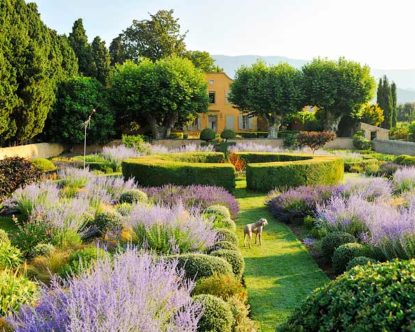
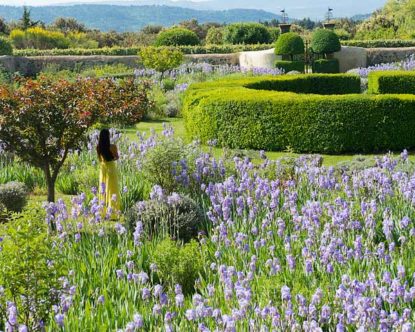
Le Pavillon de Galon is a beautiful B&B in a restored 18th century hunting pavilion with magnificent gardens right in the heart of the Luberon National Park.
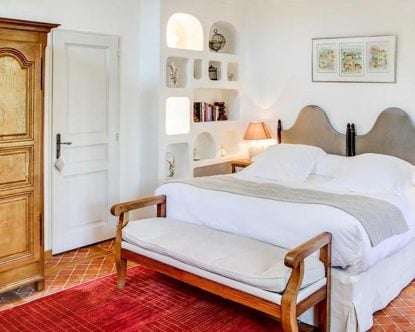
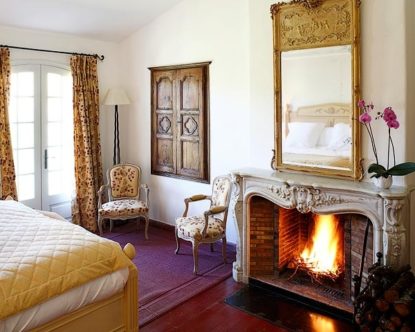
La Bastide de Moustiers is Alain Ducasse’s first country hotel nestled at the entrance of the Gorges du Verdon.
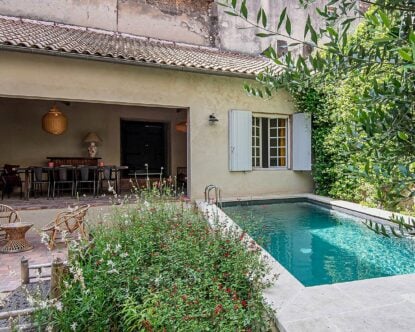
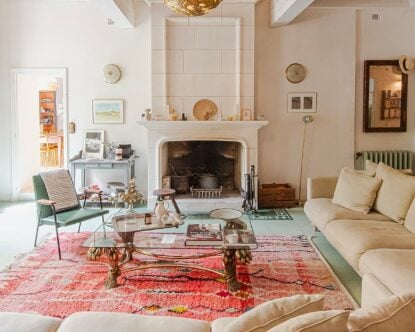
Located in the heart of Arles, Arles Villa is a beautifully preserved holiday home with secluded gardens, a swimming pool and a hammam offering magnificent views of Arles.
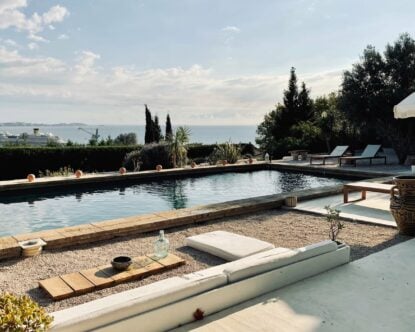
Occupying a former artist’s residence, Casa Youm is a luxury, boutique hotel in a peaceful Marseille neighbourhood. It features three Mediterranean-inspired rooms, a swimming pool and a table d’hôtes.
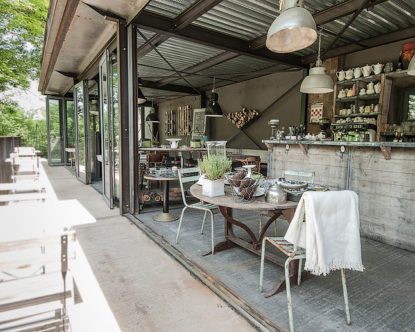
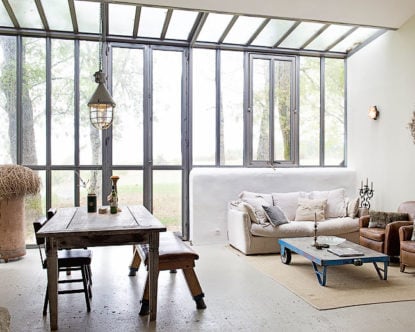
These holiday apartments in Périgord are located among rolling hills and vineyards. Bassivière might just be the kind of French country holiday you’ve been dreaming of.
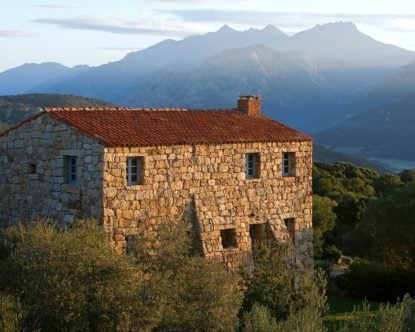
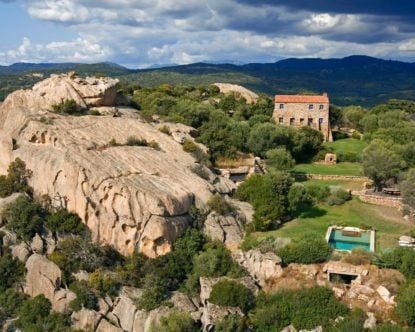
The Domaine de Murtoli is a collection of 20 beautifully restored and serene shepherds' houses and dwellings spread over a private and unspoilt property of 2500 hectares in southern Corsica.
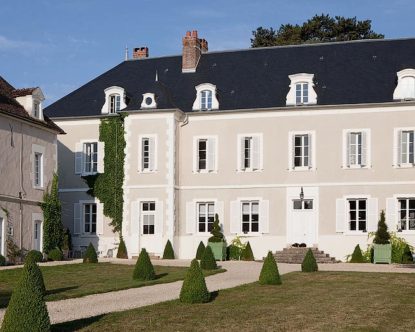

Located on top of a hill overlooking a valley in Burgundy, Château de la Resle is a small luxury countryside hotel offering six beautiful rooms, a restaurant, a gym, an outdoor pool and a spa.

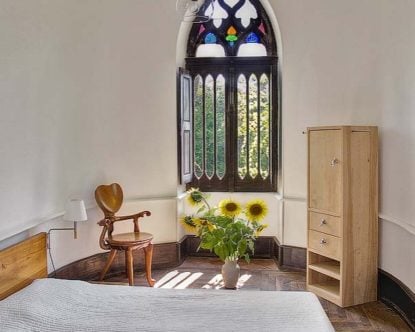
Château Marteret is a luxurious seven-room fairy tale villa rental framed by four centuries-old cedars and set into the middle of 180 hectares of land.
Continue
Let’s prepare the booking details so you can review everything. You won't be charged yet.
Already have an account? Log in
Log in